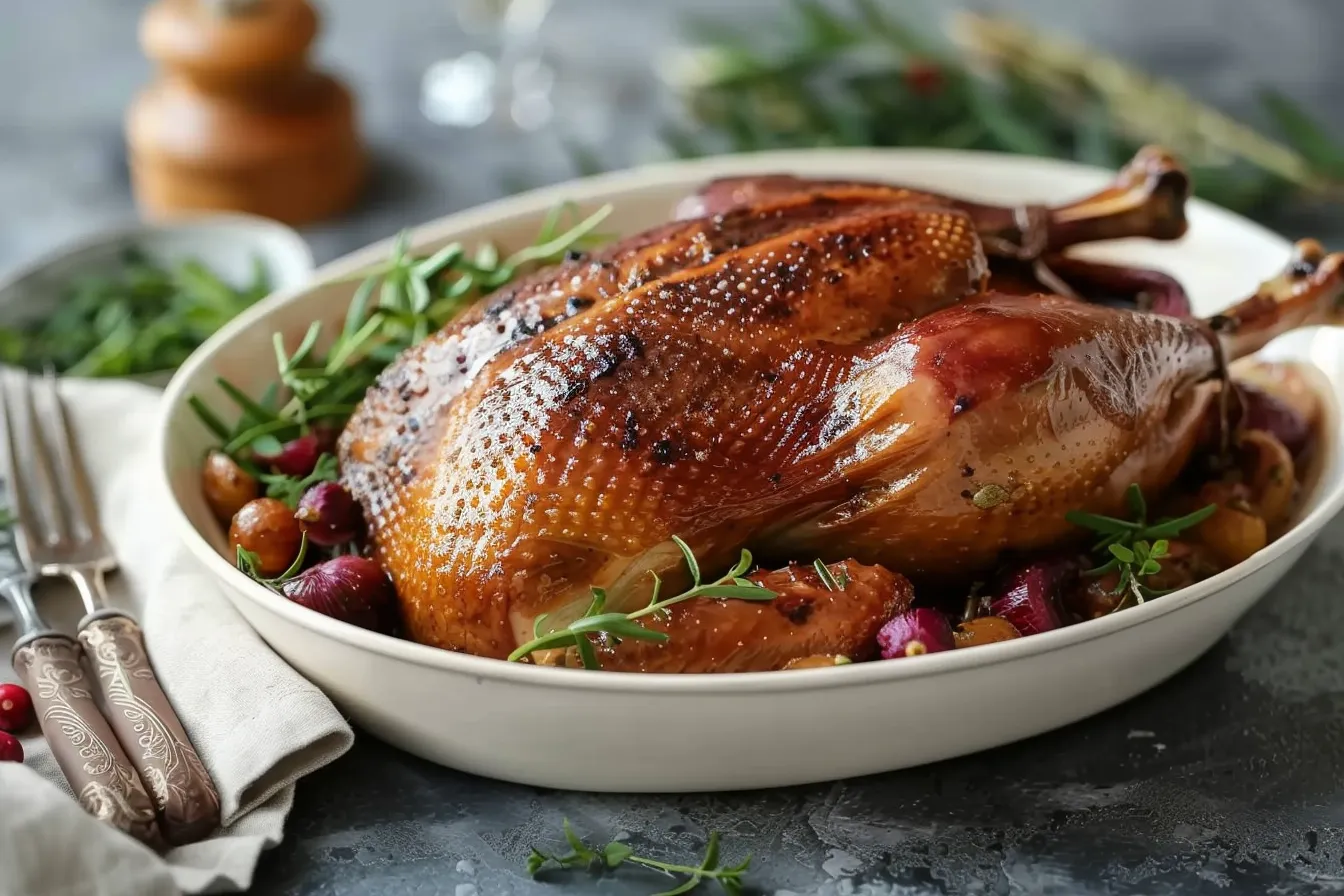
The scent of citrus and herbs, mingled with the savory aroma of roasting goose, is a Christmas memory etched in my mind. Every year, our family gathers, and the centerpiece of the feast is always a beautifully browned roast goose. It’s a labor of love, sure, but the resulting crispy skin and succulent meat are worth every bit of effort. This Chef John’s Roast Christmas Goose recipe is my go-to, and after making it countless times in my Texas kitchen, I’m confident you can nail it too. Get ready for a Christmas goose that will be the talk of the town, y’all! I promise this recipe will guide you to a show-stopping, delicious Christmas goose that your family will rave about for years to come.
Why This Recipe Works
Roast goose might seem intimidating, but with this recipe, it’s totally achievable for a home cook. It’s perfect for making unforgettable memories. Here’s why this recipe works so well for busy families:
- Foolproof Method: Chef John’s method is simple and straightforward, breaking down the process into manageable steps. Even if you’ve never roasted a goose before, you can do this!
- Flavor Explosion: The combination of herbs, citrus, and aromatics infuses the goose with incredible flavor from the inside out. No bland goose here!
- Crispy Skin Guarantee: This recipe includes tips and tricks for achieving perfectly crispy skin, the hallmark of a great roast goose.
Ingredients
- 1 (10-12 pound) goose, thawed if frozen
- 2 tablespoons kosher salt
- 1 tablespoon freshly ground black pepper
- 1 large orange, quartered
- 1 large lemon, quartered
- 2 sprigs fresh rosemary
- 2 sprigs fresh thyme
- 1 large onion, quartered
- 4 cloves garlic, smashed
- 2 cups chicken broth
- 1 cup dry white wine (optional)
Ingredient Notes
- Goose: Look for a goose that’s 10-12 pounds for a good balance of meat and fat. If you can find a fresh goose, that’s ideal, but frozen works just fine. Make sure it’s fully thawed before you start.
- Salt: Kosher salt is preferred for its coarse texture and even distribution.
- Citrus: The orange and lemon add brightness and help to cut through the richness of the goose.
- Herbs: Fresh rosemary and thyme are classic choices, but you can experiment with other herbs like sage or marjoram.
- Chicken Broth: Use low-sodium chicken broth to control the saltiness of the gravy.
- White Wine: The dry white wine adds another layer of flavor to the gravy, but you can substitute with more chicken broth if you prefer.
Step-by-Step Instructions
- Prepare the Goose: Remove the goose from its packaging and pat it dry with paper towels, inside and out. This is crucial for achieving crispy skin. Use a sharp knife to score the skin in a crosshatch pattern, being careful not to cut into the meat. This will help the fat render properly.
- Season the Goose: In a small bowl, combine the kosher salt and black pepper. Generously season the goose inside and out with the salt and pepper mixture. Don’t be shy!
- Stuff the Goose: Stuff the cavity of the goose with the quartered orange, lemon, rosemary, thyme, onion, and smashed garlic. These aromatics will infuse the goose with flavor as it roasts.
- Roast the Goose: Place the goose on a roasting rack set inside a roasting pan. Pour the chicken broth and white wine (if using) into the bottom of the pan. This will create steam and keep the goose moist.
- Initial Roasting: Roast the goose in a preheated oven at 450°F (232°C) for 30 minutes. This high heat will help to render the fat and crisp the skin.
- Reduce Heat and Continue Roasting: After 30 minutes, reduce the oven temperature to 325°F (163°C) and continue roasting for approximately 3-4 hours, or until a meat thermometer inserted into the thickest part of the thigh registers 165°F (74°C). Baste the goose with the pan juices every 30 minutes to keep it moist and promote even browning. After testing this several times, I learned that tenting the goose with foil during the last hour of roasting can prevent the skin from burning.
- Remove Excess Fat: About halfway through the roasting process, you’ll notice a significant amount of fat accumulating in the bottom of the pan. Carefully remove this fat with a turkey baster or spoon and reserve it for other uses, like roasting potatoes.
- Rest the Goose: Once the goose is cooked through, remove it from the oven and let it rest for at least 20 minutes before carving. This will allow the juices to redistribute, resulting in a more tender and flavorful bird.
- Make the Gravy: While the goose is resting, strain the pan juices through a fine-mesh sieve into a saucepan. Skim off any excess fat. Bring the pan juices to a simmer over medium heat and thicken with a cornstarch slurry (1 tablespoon cornstarch mixed with 2 tablespoons cold water). Cook until the gravy is thickened to your desired consistency.
- Carve and Serve: Carve the goose and serve with the gravy, roasted vegetables, and your favorite holiday sides. Enjoy!
Expert Tips from My Kitchen
- Scoring the Skin is Key: Don’t skip the step of scoring the skin. It’s essential for rendering the fat and achieving crispy skin.
- Don’t Overcrowd the Pan: Make sure the goose has enough room in the roasting pan. If it’s too crowded, the skin won’t crisp up properly.
- Use a Meat Thermometer: A meat thermometer is your best friend when roasting any kind of poultry. It ensures that the goose is cooked to a safe internal temperature.
- Resting is Crucial: Don’t be tempted to carve the goose right away. Letting it rest allows the juices to redistribute, resulting in a more tender and flavorful bird.
- Save the Fat: Goose fat is liquid gold! Save it for roasting potatoes, vegetables, or even making confit.
- For Extra Crispy Skin: After resting, you can broil the goose for a few minutes to further crisp the skin, but watch it carefully to prevent burning.
- Kid-Friendly Tip: My kids love the crispy skin, so I always make sure to set aside some extra for them.
Storage & Meal Prep
Leftover roast goose can be stored in an airtight container in the refrigerator for up to 3-4 days. You can also freeze it for longer storage, up to 2-3 months. Reheat the goose in a preheated oven at 350°F (175°C) until warmed through. To prevent it from drying out, you can add a little chicken broth or gravy to the container before reheating.
For meal prep, you can roast the goose a day or two ahead of time and carve it just before serving. The gravy can also be made ahead of time and reheated when ready to serve.
Substitutions & Variations
- Gluten-Free: To make this recipe gluten-free, simply use a gluten-free thickening agent for the gravy, such as cornstarch or arrowroot powder.
- Dairy-Free: This recipe is naturally dairy-free.
- Herb Variations: Feel free to experiment with different herbs, such as sage, marjoram, or tarragon.
- Citrus Variations: You can substitute the orange and lemon with other citrus fruits, like grapefruit or tangerines.
- Spiced Goose: For a more festive flavor, add a pinch of ground cinnamon, cloves, or nutmeg to the salt and pepper mixture.
Frequently Asked Questions
Can I make this ahead of time?
Yes, you can roast the goose a day or two in advance. Let it cool completely, then carve and store in an airtight container in the refrigerator. Reheat before serving. The gravy can also be made ahead and reheated.
How do I know when the goose is done?
The best way to check for doneness is to use a meat thermometer. Insert it into the thickest part of the thigh, being careful not to touch the bone. The goose is done when the thermometer registers 165°F (74°C).
Can I substitute any of the ingredients?
Yes, you can substitute the herbs and citrus fruits with your favorites. You can also use vegetable broth instead of chicken broth.
How do I store leftovers?
Store leftover goose in an airtight container in the refrigerator for up to 3-4 days, or in the freezer for up to 2-3 months.
Is this recipe kid-friendly?
Yes, kids love the crispy skin and flavorful meat. Just be sure to remove any bones before serving to young children.
What can I do with the leftover goose fat?
Goose fat is amazing for roasting potatoes, vegetables, or making confit. Store it in an airtight container in the refrigerator for several weeks or in the freezer for several months.
Can I brine the goose before roasting?
Yes, brining the goose can help to keep it moist and flavorful. However, it’s not necessary for this recipe.
Serving Suggestions
This Chef John’s Roast Christmas Goose is best served with classic holiday sides like roasted vegetables (potatoes, carrots, Brussels sprouts), stuffing, cranberry sauce, and mashed sweet potatoes. For a simple plating, arrange the carved goose on a platter and garnish with fresh herbs and orange slices. Portion sizes will depend on the size of your family, but a 10-12 pound goose should easily serve 8-10 people.
This recipe is more than just a meal; it’s a tradition. It’s about gathering around the table with loved ones and sharing a delicious meal together. I hope you’ll give this Chef John’s Roast Christmas Goose recipe a try this holiday season. Your family will thank you! And don’t forget to share your results in the comments below – I can’t wait to hear how it turns out. For more family-friendly recipes and cooking tips, be sure to visit FamiliesRecipes.com and sign up for our newsletter. Happy cooking, y’all!
PrintBest Chef Johns Roast Goose

Roast a showstopping Chef Johns Roast Christmas Goose this holiday My familyapproved recipe is comfort food tested in my Texas kitchen Get the recipe
- Prep Time: 30 minutes
- Cook Time: 4 hours
- Total Time: 4 hours 30 minutes
- Yield: 8-10
- Category: Holiday
- Cuisine: American
Ingredients
- 1 (10-12 pound) goose, thawed if frozen
- 2 tablespoons kosher salt
- 1 tablespoon freshly ground black pepper
- 1 large orange, quartered
- 1 large lemon, quartered
- 2 sprigs fresh rosemary
- 2 sprigs fresh thyme
- 1 large onion, quartered
- 4 cloves garlic, smashed
- 2 cups chicken broth
- 1 cup dry white wine (optional)
Instructions
- Remove the goose from its packaging and pat it dry with paper towels, inside and out. Use a sharp knife to score the skin in a crosshatch pattern, being careful not to cut into the meat.
- In a small bowl, combine the kosher salt and black pepper. Generously season the goose inside and out with the salt and pepper mixture.
- Stuff the cavity of the goose with the quartered orange, lemon, rosemary, thyme, onion, and smashed garlic.
- Place the goose on a roasting rack set inside a roasting pan. Pour the chicken broth and white wine (if using) into the bottom of the pan.
- Roast the goose in a preheated oven at 450°F (232°C) for 30 minutes.
- After 30 minutes, reduce the oven temperature to 325°F (163°C) and continue roasting for approximately 3-4 hours, or until a meat thermometer inserted into the thickest part of the thigh registers 165°F (74°C). Baste the goose with the pan juices every 30 minutes.
- About halfway through the roasting process, carefully remove excess fat with a turkey baster or spoon and reserve it for other uses.
- Once the goose is cooked through, remove it from the oven and let it rest for at least 20 minutes before carving.
- While the goose is resting, strain the pan juices through a fine-mesh sieve into a saucepan. Skim off any excess fat. Bring the pan juices to a simmer over medium heat and thicken with a cornstarch slurry.
- Carve the goose and serve with the gravy, roasted vegetables, and your favorite holiday sides. Enjoy!