The aroma of rosemary and garlic wafting through the house on Christmas morning is a memory I cherish. For our family, that smell means only one thing: a glorious, juicy Christmas Prime Rib. It’s a tradition I’ve carried on since I started FamiliesRecipes.com, and I’ve made this recipe countless times in my own Texas kitchen. Y’all, it’s simpler than you think, and the results are absolutely show-stopping. I’m tweaking my prime rib recipe again this year, updating it with a few tips I learned from some reader feedback (thanks, everyone!). By the end of this, you’ll have the confidence to roast the perfect prime rib, no matter your experience level.
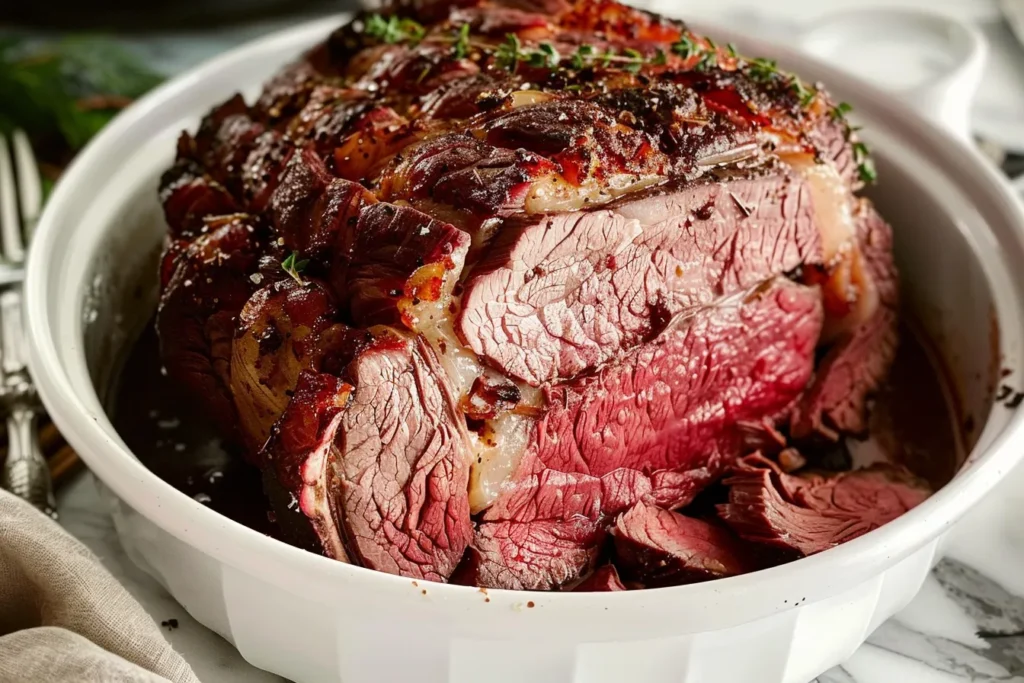
Why This Recipe Works
This Christmas Prime Rib recipe is my go-to because it delivers incredible flavor and impressive results without being overly complicated. As a busy mom, I appreciate that! Here’s why I think you’ll love it too:
- Surprisingly Simple: The ingredient list is short, and the steps are straightforward. No fancy techniques required!
- Impressive Flavor: The combination of herbs, garlic, and a slow roast creates a deeply savory and aromatic experience.
- Make-Ahead Potential: You can prep the rub and even the entire roast a day or two in advance, making Christmas Day cooking a breeze.
- Family-Approved: Even my picky eaters enjoy this prime rib, especially with a side of creamy mashed potatoes (see below!).
Ingredients
- 4-5 pound Prime Rib Roast (bone-in or boneless)
- 2 tablespoons Olive Oil
- 4 cloves Garlic, minced
- 2 tablespoons Fresh Rosemary, chopped
- 1 tablespoon Fresh Thyme, chopped
- 2 teaspoons Kosher Salt
- 1 teaspoon Black Pepper
Ingredient Notes
Let’s chat about these ingredients! The star, of course, is the prime rib. Bone-in roasts tend to be more flavorful due to the bones insulating the meat during cooking. However, a boneless roast is easier to carve. The choice is yours!
Fresh herbs are key for that vibrant aroma and flavor. If you absolutely must substitute, use dried herbs, but use half the amount. For instance, 1 tablespoon of dried rosemary would replace 2 tablespoons of fresh.
Kosher salt is preferred because its larger crystals distribute more evenly. If using table salt, reduce the amount slightly.
You can find prime rib roasts at most well-stocked grocery stores or butcher shops. Don’t be afraid to ask your butcher for advice on selecting the right roast for your needs.
Step-by-Step Instructions
Now for the fun part! Follow these simple steps, and you’ll be enjoying a delicious prime rib in no time.
- Step 1: Prepare the Roast. Remove the prime rib roast from the refrigerator at least 2 hours before cooking. This allows it to come to room temperature, which helps it cook more evenly. Pat the roast dry with paper towels.
- Step 2: Make the Herb Rub. In a small bowl, combine the olive oil, minced garlic, chopped rosemary, chopped thyme, kosher salt, and black pepper. Mix well to form a fragrant paste.
- Step 3: Season the Roast. Generously rub the herb mixture all over the prime rib roast, ensuring every surface is well coated. Don’t be shy! This is where all that wonderful flavor comes from.
- Step 4: Preheat the Oven. Preheat your oven to 450°F (232°C). Make sure your oven rack is in the center position.
- Step 5: Sear the Roast. Place the seasoned prime rib roast in a roasting pan, fat side up. Sear it in the preheated oven for 15 minutes. This creates a beautiful crust and seals in the juices.
- Step 6: Reduce the Heat and Roast. After 15 minutes, reduce the oven temperature to 325°F (163°C). Continue roasting until the internal temperature reaches your desired doneness. For rare, aim for 120-125°F (49-52°C); for medium-rare, 130-135°F (54-57°C); and for medium, 140-145°F (60-63°C). Use a meat thermometer inserted into the thickest part of the roast to check the temperature.
- I learned after the third try that a digital leave-in thermometer is essential for perfectly cooked prime rib! No more guessing!
- A 4-5 pound roast typically takes about 13-15 minutes per pound for medium-rare, but always rely on the thermometer, not just the time.
- Step 7: Rest the Roast. Once the roast reaches your desired temperature, remove it from the oven and tent it loosely with foil. Let it rest for at least 20-30 minutes before carving. This allows the juices to redistribute, resulting in a more tender and flavorful roast.
- Step 8: Carve and Serve. Carve the prime rib against the grain into slices about 1/4-inch thick. Serve immediately and enjoy!
Expert Tips from My Kitchen
After making this dozens of times, here’s what I’ve learned:
- Don’t Skip the Rest: Resting the prime rib is crucial! It allows the juices to redistribute, resulting in a more tender and flavorful roast.
- Use a Meat Thermometer: A reliable meat thermometer is your best friend. Don’t rely solely on cooking time.
- Season Generously: Don’t be afraid to season the roast well. The salt and pepper help to develop a beautiful crust.
- Make-Ahead Magic: Prepare the herb rub a day or two in advance to save time on Christmas Day. You can even rub the roast and store it in the refrigerator until you’re ready to cook it.
- Adjust for Altitude: If you live at a high altitude, you may need to increase the cooking time slightly.
- Kid-Friendly Tip: For picky eaters, try serving the prime rib with a simple gravy or au jus.
- Don’t Toss the Bones: If you used a bone-in roast, save the bones to make a delicious beef broth later!
Storage & Meal Prep
Got leftovers? Lucky you!
- Storage: Store leftover prime rib in an airtight container in the refrigerator for up to 3-4 days.
- Reheating: Reheat gently in a low oven (250°F/121°C) or in a skillet over low heat to prevent it from drying out. Adding a little beef broth or au jus can help keep it moist.
- Make-Ahead: As mentioned earlier, you can prepare the herb rub and even rub the roast a day or two in advance.
- Freezing: While you can freeze cooked prime rib, it’s best enjoyed fresh. Freezing can affect the texture. If you do freeze it, wrap it tightly in plastic wrap and then in foil. Use within 2-3 months.
Substitutions & Variations
Want to tweak this recipe to suit your needs? Here are a few ideas:
- Gluten-Free: This recipe is naturally gluten-free!
- Herb Variations: Experiment with different herbs, such as oregano, sage, or marjoram.
- Spice It Up: Add a pinch of red pepper flakes to the herb rub for a little heat.
- Garlic Lover’s Dream: Double the amount of garlic for an even more intense garlic flavor.
- Horseradish Crust: Mix prepared horseradish with softened butter and spread it over the roast during the last 30 minutes of cooking for a zesty crust. I haven’t tried this exact substitution yet, but readers have told me it works well.
Frequently Asked Questions
Can I make this ahead?
Yes! You can prepare the herb rub up to 2 days in advance and store it in an airtight container in the refrigerator. You can also rub the roast with the herb mixture and store it in the refrigerator for up to 24 hours before cooking. Just be sure to bring it to room temperature before roasting.
How do I know when it’s done?
The best way to determine doneness is to use a meat thermometer. Insert it into the thickest part of the roast, avoiding the bone. Aim for 120-125°F (49-52°C) for rare, 130-135°F (54-57°C) for medium-rare, and 140-145°F (60-63°C) for medium. Remember that the internal temperature will continue to rise slightly as it rests.
What can I substitute for fresh rosemary and thyme?
If you don’t have fresh rosemary and thyme, you can use dried herbs. Use half the amount of dried herbs as you would fresh herbs. For example, if the recipe calls for 2 tablespoons of fresh rosemary, use 1 tablespoon of dried rosemary.
How do I store leftovers?
Store leftover prime rib in an airtight container in the refrigerator for up to 3-4 days. Reheat gently in a low oven or in a skillet over low heat to prevent it from drying out.
Is this kid-friendly?
A: Absolutely! Prime rib is generally well-received by kids, especially when served with familiar sides like mashed potatoes and green beans. You can also cut the meat into smaller pieces for younger children.
My prime rib is dry, what did I do wrong?
Overcooking is the most common cause of dry prime rib. Be sure to use a meat thermometer and don’t overcook it! Resting the roast is also crucial for retaining moisture.
Serving Suggestions
Prime rib is a show-stopping main course, but it’s even better with the right sides. Here are a few of my favorites:
- Mashed Potatoes: Creamy mashed potatoes are a classic pairing.
- Roasted Vegetables: Roasted Brussels sprouts, carrots, or asparagus add a pop of color and flavor.
- Yorkshire Puddings: These light and airy popovers are perfect for soaking up the delicious pan drippings.
- Horseradish Sauce: A dollop of horseradish sauce adds a zesty kick.
- Green Bean Casserole: A Texas holiday staple.
For presentation, arrange the carved prime rib slices on a platter, garnish with fresh rosemary sprigs, and serve immediately with your favorite sides. A 4-5 pound roast will typically serve 6-8 people.
Y’all, this Christmas Prime Rib recipe is more than just a dish; it’s a tradition, a memory in the making. It’s the aroma that fills your home, the smiles around the dinner table, and the feeling of warmth and connection that makes the holidays so special. I truly hope you give this recipe a try and create your own prime rib memories. It’s simpler than you think, and the results are truly worth it.
PrintEasy Christmas Prime Rib Recipe

Whip up an Easy Christmas Prime Rib with this familyapproved recipe from my Texas kitchen Its comfort food my kids love Get the recipe
- Prep Time: 15 minutes
- Cook Time: 1 hour 30 minutes
- Total Time: 1 hour 45 minutes
- Yield: 6-8
- Category: Main Course
- Cuisine: American
Ingredients
- 4–5 pound Prime Rib Roast (bone-in or boneless)
- 2 tablespoons Olive Oil
- 4 cloves Garlic, minced
- 2 tablespoons Fresh Rosemary, chopped
- 1 tablespoon Fresh Thyme, chopped
- 2 teaspoons Kosher Salt
- 1 teaspoon Black Pepper
Instructions
- Remove the prime rib roast from the refrigerator at least 2 hours before cooking. Pat the roast dry with paper towels.
- In a small bowl, combine the olive oil, minced garlic, chopped rosemary, chopped thyme, kosher salt, and black pepper. Mix well to form a fragrant paste.
- Generously rub the herb mixture all over the prime rib roast, ensuring every surface is well coated.
- Preheat your oven to 450°F (232°C). Make sure your oven rack is in the center position.
- Place the seasoned prime rib roast in a roasting pan, fat side up. Sear it in the preheated oven for 15 minutes.
- After 15 minutes, reduce the oven temperature to 325°F (163°C). Continue roasting until the internal temperature reaches your desired doneness. For rare, aim for 120-125°F (49-52°C); for medium-rare, 130-135°F (54-57°C); and for medium, 140-145°F (60-63°C). Use a meat thermometer inserted into the thickest part of the roast to check the temperature.
- Once the roast reaches your desired temperature, remove it from the oven and tent it loosely with foil. Let it rest for at least 20-30 minutes before carving.
- Carve the prime rib against the grain into slices about 1/4-inch thick. Serve immediately and enjoy!