As the warmth of spring begins to blossom, there’s something magical about the air. It’s that time of year when families gather to share laughter, love, and delectable food. The aroma of freshly baked Italian Easter Bread wafts through the kitchen, transporting you back to cherished moments spent with family. This vibrant, braided loaf, adorned with colorful Easter eggs, not only captures the spirit of the holiday but also invites everyone to partake in a joyous tradition. The soft, chewy texture enveloped in a sweet, citrusy flavor is irresistible, making it a must-have for your Easter celebration. If you’ve ever witnessed the joy on a loved one’s face as they break into this gorgeous bread, you know just how meaningful it can be to share traditions through food.
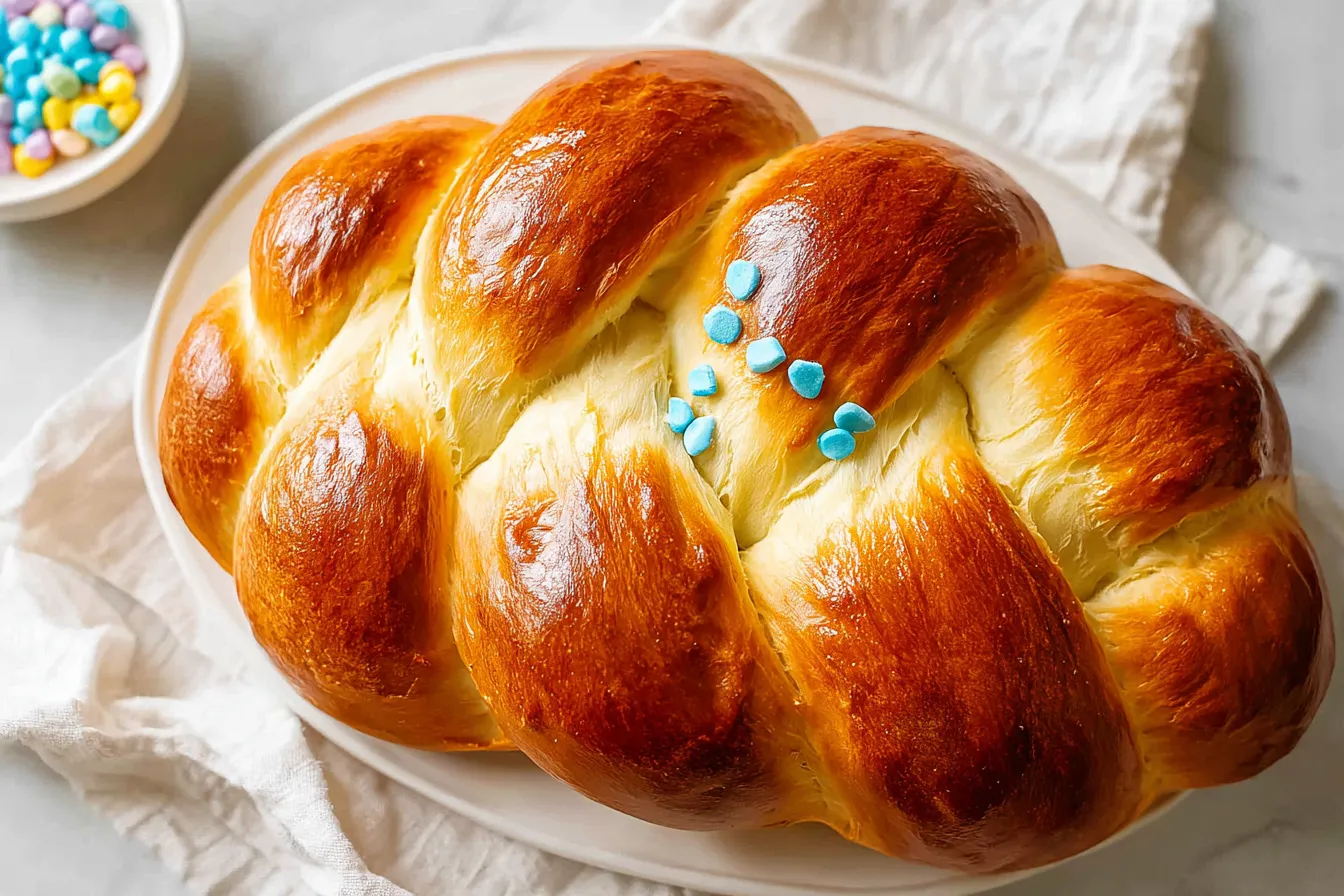
Growing up in a close-knit Italian family, Easter was always signified by the warmth of my grandmother’s kitchen, filled with the sweet smell of her homemade Italian Easter Bread. Each year, she would patiently guide us through the process, teaching not just recipes but the importance of heritage. I remember my first time attempting to make this cherished recipe on my own, feeling a mix of excitement and anxiety as I kneaded the dough. Over time, I’ve refined the steps and discovered some exciting new twists, making it more accessible to everyone, especially with the growing trend of homemade seasonal baking. With the vibrant colors of spring all around us, now is the perfect time to embrace this beautiful tradition in your own kitchen.
Ingredients
- 4 cups all-purpose flour – Provides structure.
- 1 cup milk – Adds moisture and richness; use almond or oat milk for a dairy-free option.
- ½ cup granulated sugar – Sweetens and helps achieve a lovely golden crust.
- ¼ cup unsalted butter – Enriches the dough with flavor; replace with coconut oil for a dairy-free version.
- 3 large eggs – Contributes to a tender crumb; substitute with flax eggs for vegan needs.
- 1 packet active dry yeast (2 ¼ tsp) – Acts as the leavening agent for a light, fluffy bread.
- Zest of 1 orange and 1 lemon – Infuses refreshing citrus notes.
- 1 tsp vanilla extract – Enhances flavor depth; swap for almond extract for a different twist.
- 1 tsp salt – Balances sweetness and brings out flavors.
- Colored Easter eggs – Optional decoration; consider using dyed wooden eggs for a sustainable option.
Step-by-Step Instructions
Start by warming the milk in a small saucepan until it’s lukewarm, not hot. Adding the yeast to this warm milk gives it the perfect environment to bloom, ensuring your bread rises beautifully. In a large mixing bowl, combine the warm milk with sugar and yeast, letting it sit for about 5–10 minutes until bubbly.
Once foamy, mix in the melted butter, eggs, vanilla extract, and citrus zests. This mixture should smell heavenly! Gradually add the flour and salt, one cup at a time, stirring until a shaggy dough forms. It’s time to roll up your sleeves; knead the dough on a lightly floured surface for about 8–10 minutes until it’s smooth and elastic. As you knead, enjoy the tactile experience—the dough will transform under your hands, becoming soft and pliable.
Place your kneaded dough in a greased bowl, cover it with a damp cloth or plastic wrap, and let it rise in a warm spot until doubled in size—this usually takes about an hour. While you wait, take a moment to appreciate the season. When the dough has risen, punch it down gently and divide it into three equal portions.
Roll each piece into long strands, about 12 inches long, and then braid them together. Once shaped, transfer the braid to a prepared baking sheet lined with parchment paper. If you’re using colored Easter eggs, nestle them gently into the braid before the second rise.
Cover the braid again and let it rise for another 30 minutes. Preheat your oven to 350°F (175°C) during this time. Bake the bread for 25–30 minutes, keeping an eye out for that golden-brown color. It’s the perfect moment to enjoy the scent of freshly baked bread wafting through your home.
Once baked, let it cool slightly before indulging. The glaze of sugar water can be brushed on while still warm, adding a glossy finish and imparts sweetness that lightly glistens under the spring sunlight.
Expert Tips
When baking Italian Easter Bread, attention to detail is key. Here are a few professional insights:
- Make sure your yeast is fresh; expired yeast can lead to flat bread.
- For optimal texture, using bread flour can yield a chewier loaf, while all-purpose flour will work just fine as well.
- Don’t rush the rising times; allowing the dough to rise adequately will result in a lighter texture.
- If your kitchen is cool, try placing the dough in the oven (turned off) with the light on to create a warm environment.
- A sturdy braid not only looks beautiful but helps the bread bake evenly, so take your time with the braiding process.
- Experiment with flavors; adding spices like cinnamon or nutmeg can personalize the recipe to your family’s taste.
Storage & Substitutions
To store your Italian Easter Bread, allow it to cool completely, then wrap it tightly in plastic wrap or foil and place it in an airtight container. It can be stored at room temperature for up to three days or in the refrigerator for a week. If you want to enjoy it beyond that, consider slicing and freezing it. Wrap individual slices in plastic wrap and place them in a freezer bag. They can be thawed at room temperature or popped into a toaster.
For substitutions, feel free to play around with the ingredients. Use whole wheat flour for additional fiber or replace sugar with honey or maple syrup for a natural sweetener. If you’re working with dietary restrictions, the flexibility of this recipe allows for many adaptations while maintaining the spirit of this traditional bread.
How do I make this recipe ahead?
You can prepare the dough a day ahead and let it rise in the fridge overnight. Simply shape it before baking the next day. It saves time and allows the flavors to develop further.
Can I use different flavors in the dough?
Absolutely! Feel free to add spices like cinnamon, nutmeg, or cardamom, or even incorporate dried fruits such as raisins or cranberries for a sweeter twist.
What if my dough isn’t rising?
If your dough isn’t rising, it could be due to inactive yeast or a cool environment. Ensure your yeast is fresh, and try placing it in a warmer location.
Can I skip the colored eggs on top?
Yes, the colored eggs are optional! You can decorate your bread with a simple glaze or leave it plain, focusing on the beauty of the braided loaf itself.
What do I serve with Italian Easter Bread?
This bread pairs beautifully with a variety of accompaniments! Serve it with butter, cream cheese, or even a sweet fruit spread for breakfast or as part of a festive brunch.
Can I make a smaller batch?
Certainly! You can easily halve the recipe if you’re looking to make a smaller loaf, just be mindful of the rising times.
PrintEasy Italian Easter Bread Recipe

Bake delightful Italian Easter Bread with this easy recipe tested in my Texas kitchen Familyapproved and perfect for gatherings Get the recipe
- Prep Time: 20 minutes
- Cook Time: 30 minutes
- Total Time: 1 hour 50 minutes
- Yield: 1 loaf
- Category: Dessert
- Cuisine: Italian
Ingredients
- 4 cups of all-purpose flour
- 1 cup of milk
- ½ cup of granulated sugar
- ¼ cup of unsalted butter
- 3 large eggs
- 1 packet active dry yeast (2 ¼ tsp)
- Zest of 1 orange
- Zest of 1 lemon
- 1 teaspoon of vanilla extract
- 1 teaspoon of salt
- Colored Easter eggs (optional)
Instructions
- Warm the milk in a small saucepan until lukewarm, then add the yeast to bloom.
- Combine warm milk with sugar and yeast, and let sit for 5–10 minutes until bubbly.
- Mix in melted butter, eggs, vanilla extract, and citrus zests.
- Gradually add flour and salt, stirring until a shaggy dough forms.
- Knead the dough for 8–10 minutes until smooth and elastic.
- Place dough in a greased bowl, cover, and let it rise for about an hour until doubled in size.
- Punch down, divide into three portions, and roll each into long strands.
- Braid the strands together and place on a prepared baking sheet.
- If using colored eggs, nestle them in the braid before the second rise.
- Cover and let rise for another 30 minutes, then preheat the oven to 350°F (175°C).
- Bake for 25–30 minutes until golden brown.
- Brush with sugar water glaze while still warm for a shiny finish.
Notes
Italian Easter Bread is a vibrant, braided loaf adorned with colorful Easter eggs, capturing the spirit of the holiday through its soft, chewy texture and sweet, citrusy flavor.