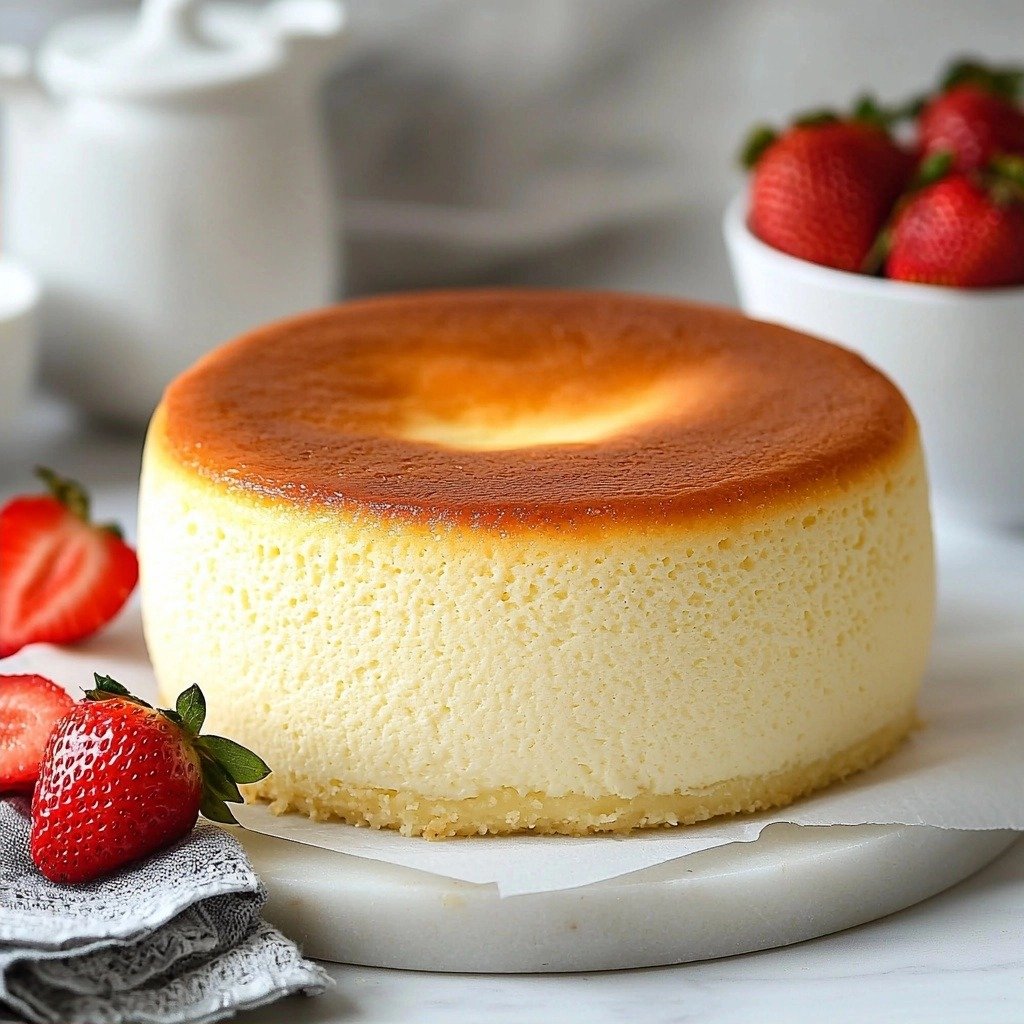
There’s something truly magical about a dessert that feels like a cloud in your mouth. For me, that magic happens every time I bake a Japanese Cotton Cheesecake. It’s not just a recipe; it’s a little moment of peace, watching that fluffy batter come together, knowing that soon my kitchen will smell like sweet, creamy heaven. This cheesecake isn’t like any other you’ve had – it’s incredibly light, jiggly, and just melts away. It’s the kind of treat that makes you close your eyes and savor every single bite.
Why You’ll Love This Japanese Cotton Cheesecake
- It’s unbelievably light and airy, almost like eating a sweet cloud!
- The flavor is delicate and creamy, a perfect balance that isn’t too rich.
- It’s a showstopper dessert that’s surprisingly fun to make.
- Perfect for any occasion, from a special dinner to a cozy Sunday afternoon treat.
Ingredients You’ll Need
- Cake Flour: This is key for that super tender, soft crumb. Don’t swap it for all-purpose flour if you can help it!
- Cornstarch: Works with the cake flour to give the cheesecake its delicate structure and prevents it from being too dense.
- Cream Cheese (full fat brick): Go for the full-fat block cream cheese for the best flavor and texture. It melts beautifully and adds that essential creaminess.
- Unsalted Butter (room temperature): Room temperature butter blends smoothly, ensuring a lump-free batter.
- Milk (full fat): Full-fat milk adds richness and helps create that signature moistness.
- Large Egg Yolks (room temperature): Yolks add richness, color, and help emulsify the batter. Room temperature eggs mix in much better!
- Vanilla Extract: Just a touch enhances all the other flavors beautifully.
- Large Egg Whites (room temperature): These are whipped into a meringue, which is what gives the cheesecake its incredible lift and airy texture. Room temperature whites whip up best.
- Granulated Sugar: Sweetens the cheesecake and stabilizes the egg white meringue.
- Lemon Juice: A little bit helps stabilize the egg whites, making your meringue stronger and fluffier.
How to Make Japanese Cotton Cheesecake Step by Step
First things first, let’s get your oven ready and your pan prepped. You’ll want to preheat your oven to 300°F (150°C) and then line the bottom and sides of a 6-inch round baking pan with parchment paper. This step is super important for getting your cheesecake out easily later!
Now for the creamy base! You’ll create a double boiler setup. Fill a small saucepan with water about halfway and bring it to a boil. Then, in a heatproof mixing bowl that fits snugly over your saucepan, combine the cream cheese, butter, and milk. Whisk it gently until everything is melted and smooth, aiming for about 130°F (55°C). This is where all those rich flavors come together. Take the bowl off the heat and whisk in your egg yolks and vanilla until they’re fully combined.
Next, we’ll add the dry ingredients for structure. Sift the cake flour and cornstarch right into your cream cheese mixture. Whisk until it’s super smooth, then – this is a fun little trick – pour the whole batter through a fine mesh sieve. This extra step ensures your batter is perfectly lump-free and silky, which really helps with that “cotton” texture. Now for the magic: the meringue! In a separate, clean bowl, beat your room-temperature egg whites with lemon juice on high until they’re foamy. Then, gradually add the granulated sugar in three batches, continuing to beat until you get medium-soft peaks. This means when you lift the mixer, the peaks will gently fold over, like soft-serve ice cream. Finally, turn the mixer to low for about 30 seconds to get rid of any really big air bubbles. You’re doing great!
My Top Tips for Success
- I always make sure my eggs are at room temperature. It really helps the yolks blend smoothly and the whites whip up perfectly.
- In my experience, sifting the dry ingredients and then straining the batter makes a huge difference in achieving that perfectly smooth, cloud-like texture. Don’t skip it!
- When folding the meringue into the batter, be gentle! I use a rubber spatula and fold slowly to keep all that precious air in there. Over-mixing is the enemy of fluffy cheesecake.
- Trust me on this one: the water bath is essential. It creates a steamy environment that helps the cheesecake bake evenly and prevents cracks.
- Don’t rush the cooling process! Leaving the cheesecake in the oven with the door cracked, then letting it cool in the pan, helps prevent temperature shock and keeps it from shrinking too much.
Common Mistakes to Avoid
- Overmixing the batter: This can develop the gluten in the flour, leading to a tough cheesecake instead of a light, airy one. Gently fold the ingredients until just combined.
- Not using a water bath: Without the water bath, your cheesecake is more likely to crack and dry out around the edges. The steam helps it bake evenly and stay moist.
- Opening the oven door too early: Resist the urge to peek! Opening the oven door lets out the heat and steam, which can cause the cheesecake to sink or crack.
- Under-whipping or over-whipping the meringue: Under-whipped meringue won’t provide enough lift, while over-whipped meringue can be dry and difficult to fold in, leading to a lumpy batter. Aim for medium-soft peaks.
How to Store Japanese Cotton Cheesecake
- Countertop: Not recommended due to its delicate nature and dairy content.
- Refrigerator: Store covered tightly with plastic wrap or in an airtight container for up to 3-4 days.
- Freezer: Wrap individual slices or the whole cheesecake tightly in plastic wrap, then foil. Freeze for up to 1 month. Thaw in the refrigerator overnight before serving.
Frequently Asked Questions
What makes Japanese Cotton Cheesecake so different?
It’s all about the texture! Unlike dense New York-style cheesecakes, Japanese Cotton Cheesecake is incredibly light, airy, and jiggly, almost like a soufflé, thanks to the whipped egg whites (meringue) folded into the batter.
Can I make this cheesecake ahead of time?
Absolutely! This cheesecake actually tastes even better the next day after it’s had a chance to chill and for the flavors to meld. Just store it in the refrigerator.
Why did my cheesecake crack on top?
Cracking often happens if the oven temperature is too high, causing the cake to bake too quickly on the outside. It can also be from cooling too rapidly. Following the specific baking and cooling instructions carefully helps prevent this.
Do I really need cake flour?
Yes, cake flour is recommended! Its lower protein content contributes significantly to the delicate, tender crumb that is characteristic of a Japanese Cotton Cheesecake. All-purpose flour will result in a denser texture.
I really hope you give this Japanese Cotton Cheesecake a try! It’s such a rewarding bake and truly a unique experience. When you pull it out of the oven, jiggly and golden, you’ll know exactly what I mean about that cloud-like magic. If you make it, please let me know how it turns out – I always love hearing from you!
PrintJapanese Cotton Cheesecake

This incredibly light and airy Japanese Cotton Cheesecake melts in your mouth, offering a delicate sweetness and a wonderfully jiggly texture.
- Prep Time: 30
- Cook Time: 80
- Total Time: 110
- Yield: 8 servings
- Category: Dessert
- Method: Baking
- Cuisine: Japanese
- Diet: Vegetarian
Ingredients
- ¼ cup (30 g) cake flour
- 2 tablespoon (20 g) cornstarch
- ¾ cup (180 g) cream cheese full fat brick
- 2 tablespoon (30 g) unsalted butter room temperature
- 3 ½ tablespoon (50 g) milk full fat
- 3 large egg yolks room temperature
- ½ teaspoon (2 g) vanilla extract
- 3 large egg whites room temperature
- ⅓ cup (70 g) granulated sugar
- ½ teaspoon (2 g) lemon juice
- powdered sugar garnish
Instructions
- Preheat your oven to 300°F (150°C).
- Line the bottom and sides of your 6-inch round baking pan with parchment paper.
- Fill a small saucepan with water halfway.
- Bring the water in the saucepan to a boil.
- Place a mixing bowl on top of the saucepan to create a double boiler.
- Add the cream cheese, butter, and milk to the mixing bowl.
- Whisk until the cream cheese and butter are melted and fully combined.
- Ensure the mixture reaches about 130°F (55°C).
- Remove the cream cheese bowl from the heat.
- Whisk in the egg yolks until combined.
- Whisk in the vanilla extract until combined.
- Place a fine mesh sieve over the cream cheese mixture.
- Sift in the cake flour through the sieve.
- Sift in the cornstarch through the sieve.
- Whisk the batter until it is smooth.
- Pour the entire batter through a fine mesh sieve into another bowl to remove any lumps.
- In a large mixing bowl, add the egg whites.
- Add the lemon juice to the egg whites.
- Using an electric hand mixer, beat the egg whites on high speed until they become white and frothy.
- Slowly pour in ⅓ of the granulated sugar while the mixer is running.
- Continue mixing, adding the remaining sugar in two more batches.
- Beat until the meringue reaches medium soft peaks (peaks will slowly fold over like soft serve ice cream).
- Turn the mixer to low speed.
- Mix the meringue for an additional 30 seconds to beat out any large air bubbles.
- Take ⅓ of the prepared meringue.
- Add this ⅓ of meringue into the egg batter mixture.
- Fold until it is completely combined and smooth.
- Gently pour the egg batter mixture into the remaining meringue.
- Carefully fold the batter with a rubber spatula until just combined.
- Avoid over-mixing to prevent deflating the air in the batter.
- Pour the batter into the lined baking pan from about 5 inches above the pan to release large air bubbles.
- Place the cheesecake pan into a larger, deep baking tray.
- Fill the larger tray with about 1-2 cm of hot boiling water to create a water bath.
- Bake in the preheated oven at 300°F (150°C) for 30 minutes.
- After 30 minutes, lower the oven temperature to 230°F (110°C).
- Bake for another 30 minutes.
- Increase the oven temperature to 275°F (135°C).
- Bake for an additional 13-15 minutes.
- Monitor the cake closely to prevent cracking. If cracks appear, slightly crack the oven door for about 5 seconds to release steam.
- The cake is done when the top is golden and a toothpick inserted in the center comes out mostly clean.
- Turn off the oven when baking is complete.
- Leave the cake in the oven for about 15 minutes with the oven door slightly cracked.
- Remove the water bath from the oven.
- Let the cake sit in the oven for another 15 minutes.
- Remove the cake from the tin.
- Place the cake on a wire rack to cool completely.
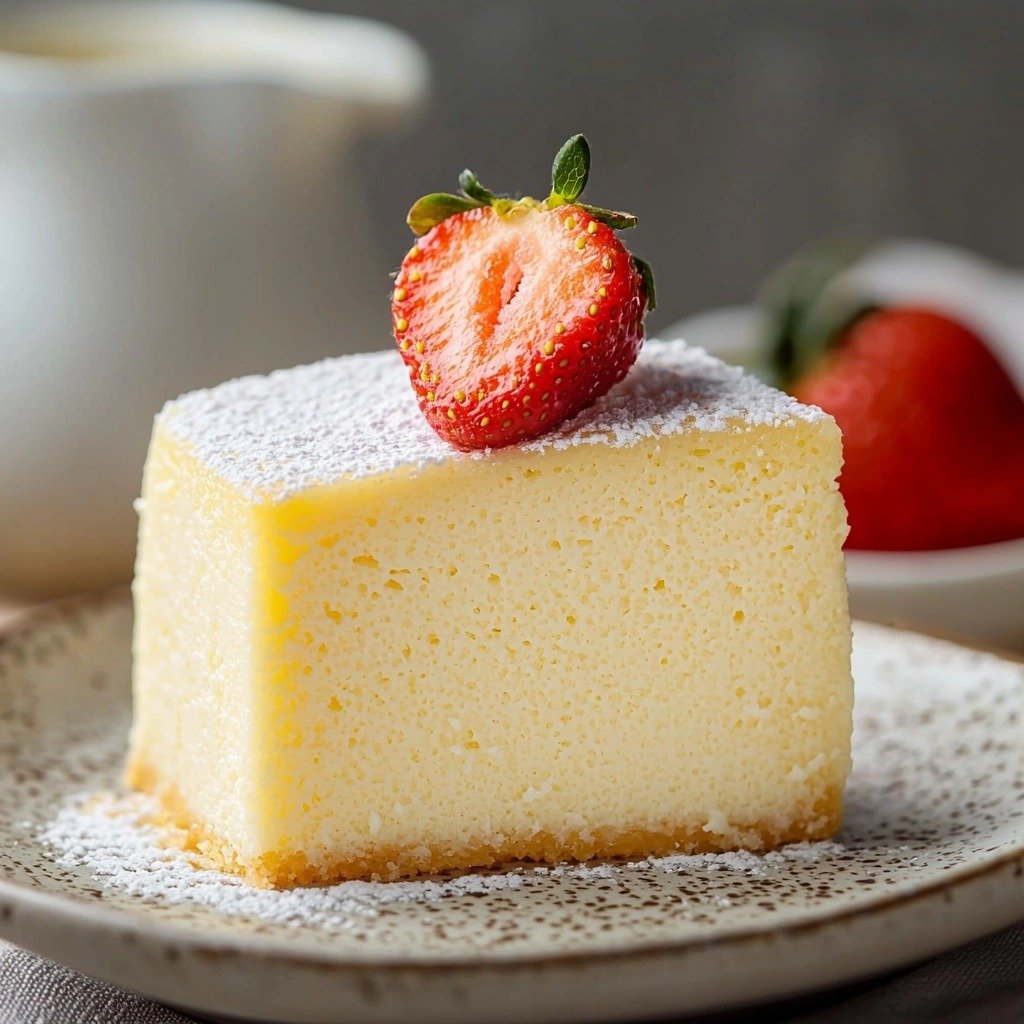
- Sift some powdered sugar on top before serving.
- Enjoy!
Notes
Ensure all cold ingredients, especially eggs and cream cheese, are at room temperature for best mixing results.
Always use a water bath; it’s crucial for even baking and to prevent cracking and drying out.
When folding the meringue, be gentle. Over-mixing can deflate the air, leading to a dense cake.
Don’t rush the cooling process; the gradual cooling helps prevent the cheesecake from shrinking dramatically.